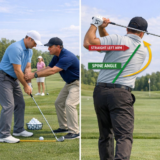
The follow-through is too frequently enough dismissed as merely a stylistic flourish in mainstream teaching, yet contemporary biomechanical and performance research makes clear that the motions after contact are integral to shot distance, directional control, and reproducibility across full swings, tee shots and strokes on the green. This piece – “Master the Follow-Through: Transform Swing,Driving & Putting” – reframes the finish as a measurable,trainable element of technique. Drawing from motor control, sports biomechanics and applied coaching, it collates evidence on how finish mechanics influence the sequencing of energy, clubface behavior at impact, ground-reaction force patterns, and the neuromuscular coordination that supports reliable execution.
Framing the finish as part of the complete motor task clarifies that it is indeed not a passive aftermath of impact but a visible indicator of kinematic integrity (pelvis → torso → upper limb release),effective deceleration strategy,and adherence to the intended stroke. For long shots and tee shots, the finish relates directly to clubhead velocity, smash factor, launch conditions and lateral dispersion; in putting, follow-through attributes relate to impact acceleration, face rotation and the onset of true forward roll. These outcomes are measurable – using clubhead/ball speed, face angle and path at impact, launch and spin figures, pelvis‑torso separation, joint ranges and force-time curves – and quantifying them enables targeted corrective work.
This article supplies a practical, evidence-informed blueprint: (1) synthesize core biomechanical findings, (2) present objective metrics and assessment routines to evaluate finish quality, (3) offer a selection of drills to address frequent weaknesses while maintaining golf-specific context, and (4) recommend how to embed follow-through training in weekly practice and coaching cycles. By treating the follow-through as an operational performance feature, coaches and players can translate lab-derived insight into on-course gains in power, accuracy and repeatability.
Kinetics, Kinematics and energy Flow: How an Effective Follow-Through Is Built
Efficient finishes originate in a correctly sequenced kinetic chain: the ground interaction and coordinated segment rotations that feed energy into the club. In biomechanical language, kinetics denotes forces (ground reaction, muscle torques) and kinematics the resulting motions (rotation magnitudes, segment velocities). For a consistent driver or long‑iron finish, aim to initiate the downswing with a controlled lateral shift from a neutral stance (typical coaching checkpoints indicate roughly 40%‑60% weight at address shifting toward 60%/40% at impact for many drivers), drive pelvic rotation through impact (approximately 45°-50°), and achieve substantial shoulder turn in the backswing (often 80°-100°). These numerical markers function as practical reference points on video or launch‑monitor overlays and help identify timing faults (such as, “arms pull” or early extension) that waste energy before contact.
After establishing force generation, the focus moves to timing the proximal‑to‑distal sequence that produces clean energy transfer: lower‑body torque → core rotation → upper‑body acceleration → wrist release → clubhead speed. A measurable separation (lag) between hip and shoulder rotation is characteristic of efficient swings; high‑level players commonly display a 0.15-0.25 s lag in peak angular velocity between pelvis and thorax on high‑speed captures.In practice, use slow‑motion video or wearable IMUs to show sequencing; for less experienced players, cue the feeling: start the downswing by initiating left‑hip rotation toward the target while allowing the hands to remain passive during the first ~30% of the downswing.Frequent mechanical problems include casting (premature wrist release) and upper‑body sliding; these are corrected by reinforcing ground‑force initiation and preserving a stable spine angle (approximately 5°-8° forward tilt through impact) so the low point stays ahead of the ball and produces repeatable turf interaction.
Convert these biomechanical concepts into practical motor patterns with drills that are measurable and transfer to play. Use the checklist below to improve sequencing and power transfer:
- Step drill: execute half‑shots while stepping into the lead foot at impact to internalize forward weight transfer; work in 3 sets of 8 reps and verify shifting with video or a pressure mat.
- Impact‑bag practice: short, committed strikes into an impact bag to foster forward shaft lean and delayed release; 5 × 10‑second contacts aiming for ~10°-15° forward shaft lean at impact.
- Rotation‑resistance swings: attach a resistance band behind you and make slow swings to ingrain hip‑to‑shoulder sequencing; perform 3 sets of 12 controlled repetitions.
Players new to the game should prioritize rhythm and balance (2-3 sessions per week, 200-300 purposeful swings), while low‑handicap players refine micro‑timing and peak angular velocities using technology (launch‑monitor sessions) to chase measurable improvements such as a +2-4 mph rise in clubhead speed or a 10-20 yd tightening of dispersion over 6-8 weeks.
The finish has a different role in the short game and putting. On full wedge strokes, finish length generally correlates with delivered energy and spin; on the green, the finish primarily preserves tempo, face stability and distance regulation. for putting, adopt a tempo that maintains a consistent backswing‑to‑forward ratio (a commonly used target is a 2:1 rhythm) and a follow‑through length that mirrors the backswing to stabilize speed. A practical putting drill is a gate‑and‑tee setup that enforces a square face through an accelerating finish.for chips and pitches, keep a modest forward shaft lean (~5°-10°) and compact wrist mechanics so the finish is controlled – an overly passive, long finish often signals excessive loft at impact and erratic spin. Also, adjust follow‑through expectations to surface conditions: on firm turf favor a shallower, lower‑angle blow to encourage roll; in soft or wet conditions allow a steeper attack and a fuller finish to gain carry and spin.
Bring biomechanics into course routines and pre‑shot habits. Use finish diagnostics inside your routine: verify setup (alignment, ball position and spine angle), execute a single practice swing focused on the intended finish posture, and select equipment that complements your energy‑transfer profile (appropriate shaft flex/length and conforming components per USGA standards). When wind or awkward lies demand it, alter your finish to manage trajectory – abbreviated follow‑throughs lower launch and reduce sidespin in gusty conditions.Set measurable short‑term goals – for example,target a 25% reduction in three‑putts over eight weeks through tempo work or aim to decrease driving dispersion by 10 yd by improving weight‑shift and sequencing – and track progress with video,launch‑monitor metrics and on‑course scoring to verify that technical changes yield better outcomes. This synthesis of kinetics, kinematics and applied drills connects reproducible mechanics to scoring performance so golfers at every level can leverage the follow‑through as a tactical tool.

Distinct Purposes of the Finish: Full Swing, Tee Shots and Putting – Goals & Indicators
the finishing posture is more than cosmetics; it objectively signals whether the intended kinematic sequence and impact mechanics occurred.Across full swings, drivers and putts the primary aims of the follow‑through differ: for irons and drivers the finish confirms correct weight transfer, acceleration through the ball and rotational sequencing; for putting it confirms face stability, tempo and consistent roll. Coaches should therefore use the finish diagnostically instead of forcing a particular pose – a correct finish emerges naturally from correct impact mechanics.Note also the rules environment: anchoring is banned under the Laws of Golf, so putting finishes must retain a free pendulum stroke (no anchored strokes), reinforcing the need for a technique that produces a repeatable finish without body anchoring.
Mechanically, the full swing and the driver demand different finish qualities. For solid iron shots aim for 70-80% of weight on the front foot at the finish, hips rotated roughly 45° open to the target, and a chest/shoulder plane that faces the target line or slightly beyond. Driver finishes often sit a touch higher with preserved lateral motion early in the downswing and a shallower angle of attack; realistic targets are clubhead speed gains of 2-5 mph from improved extension through impact and dispersion narrowed to within 10-15 yd for consistent tee shots.Reinforce these metrics with the practical checkpoints and drills below:
- Setup checkpoints: ball positioned forward (inside left heel for right‑handers), slight spine tilt away from the target, relaxed grip pressure (~4-5/10).
- Impact‑to‑finish drill: hit half shots and hold wrist extension through impact, maintaining an extended lead arm for 2-3 seconds.
- Step‑through swing: practice stepping with the trail foot to emphasize forward weight transfer; measure distribution with a bathroom scale or balance mat for a simple biofeedback tool.
Scale these drills from absolute beginners (balance and extension focus) to scratch players (fine‑tuning launch/spin metrics and minimizing micro faults).
Putting finishes concentrate on face alignment and a smooth release more narrowly than full swings. A dependable putting finish typically shows the putter head moving forward through the ball with the face square to target within about ±2° at impact and a putter path within ±3° for straight strokes.Tempo and stroke length are critical: for most mid‑range putts a rule of thumb is backstroke and follow‑through parity (follow‑through ≈ backswing length); for long lag putts extend the follow‑through proportionally. Useful putting exercises include:
- Gate drill: two tees forming a gate to enforce a square face and straight path; roll 30-50 putts and log face‑path deviations.
- length‑equals‑length drill: measure a 6-8 in. backswing reference and match the follow‑through to develop repeatable distance control.
- Video checks: record at 60-120 fps to verify minimal wrist hinge and a stable lower body.
These practices help beginners solidify fundamentals and allow advanced players to refine micro adjustments for speed control across varying green speeds and conditions.
Equipment and tactical thinking need to sit alongside finish training to produce measurable scoring gains. fit the driver shaft flex and loft to achieve a target launch window (many golfers aim for roughly 10°-14° launch and spin between 2,000-3,500 rpm depending on swing speed) and rehearse finishes that support that launch profile. For putting, adjust lie and length so the shoulders stay level and the hands avoid over‑rotation. adopt level‑specific practice plans: beginners do short daily balance/finish sessions (10-15 minutes); intermediates run weekly launch‑monitor sessions and short‑game sequences (e.g., 20 putts, 20 chips, 5 drives); low handicappers employ block practice targeting dispersion and lag putting with quantified goals (for example, 75% of drives within 15 yd of intended line, average lag proximity within ~3 ft on 20-40+ ft putts). During rounds, use finish diagnostics mid‑hole: if misses cluster to one side, interpret the finish to judge whether the face was open or closed at impact and make targeted adjustments (ball position, grip, or swing path).
Address common mechanical faults and mental elements to ensure training transfers to competition.Typical errors include reduced extension through impact (loss of distance),premature deceleration of the putter head (short putts),and reversed sequencing (hips lagging behind shoulders). Remedial steps include:
- Practical fixes: if finishes collapse, perform slow‑motion swings holding the end position for 3-5 seconds to ingrain extension; if putts skid, lengthen the follow‑through and confirm face contact with impact tape or a foam ball.
- Progress tracking: keep a practice log with quantitative targets (clubhead speed, dispersion, percent of putts within 3 ft) and reassess monthly.
- Mental routine: include a visualization of the desired finish in your pre‑shot routine and commit to the follow‑through before execution to reduce deceleration under stress.
Combining technical, measurable and psychological elements enables players to transform follow‑through control into tangible scoring benefits and smarter course management decisions.
Assessing the Finish: objective Metrics, Capture Protocols and On‑Course Benchmarks
Reliable biomechanical assessment starts with a standardized capture protocol tailored to golf kinematics. Use calibrated optical or inertial systems with adequate sampling rates – typically 120-240 Hz for body markers and 240-500 Hz for club‑level sensing – to minimize timing error around impact. Place markers on reproducible anatomical landmarks (C7, sternum/T10, bilateral acromions, L5, iliac crests, greater trochanters, lateral femoral epicondyles, lateral malleoli) and on the club (grip region, mid‑shaft, clubhead). Begin with a neutral calibration stance, record repeated trials (minimum 5-10 good swings per club), and log environmental variables (wind, turf, ball type). This protocol yields consistent kinematic chains and permits extraction of relevant variables such as joint angles, angular velocities and inter‑segment timing linked to finish mechanics.
from motion capture prioritize a concise set of coaching‑friendly follow‑through metrics: peak pelvis rotation and its timing relative to impact, thorax rotation at the finish, lead‑arm extension and elbow angle at release, shaft‑plane angle 100 ms after impact, and clubface angle at impact. Target ranges offer actionable guidance: recreational players can aim for pelvis rotation 40°-60° and thorax rotation near 80°-100° at the finish; advanced players should show lower trial‑to‑trial variability and clubface consistency within ±2-3°. Pair these biomechanical metrics with launch‑monitor KPIs (carry consistency within ±5 yd, ball‑speed variability <2 mph) to set stage‑appropriate benchmarks from novice to low handicap.
Convert measured deficits into structured, measurable practice progressions. The drills below isolate finish mechanics and reinforce the desired sensations:
- Finish‑hold drill: perform slow swings and hold the finish for 2-3 seconds with belt buckle and chest facing the target; record to confirm thorax rotation is in range.
- Swing‑plane rod: align a rod to the intended shaft plane to train correct shaft orientation at release; progress from slow reps to full speed while maintaining plane contact.
- Weighted‑club tempo: use a slightly heavier club to encourage full extension and delayed release; sets of 8-12 swings with a focus on a 3:1 backswing:downswing feel.
- Impact‑to‑finish sequence: hit half‑shots, check clubface angle with video or mirror, then progress to full shots once face variance is within target.
Log objective metrics weekly and set incremental targets (such as, cut face‑angle SD by ~1° per month) to sustain evidence‑based improvement.
Embed finish mastery into course strategy by establishing on‑course benchmarks and decision rules.One example: during practice rounds require approaches to mid‑sized greens to finish within 30 ft of the hole on at least 50% of attempts; if finish metrics deteriorate in wind, switch to a controlled three‑quarter finish to lower trajectory and contain dispersion.In match or stroke play use consistency windows (carry ±5 yd, lateral dispersion ±8 yd) as club‑selection criteria rather than always going for maximum distance. Practice situational shots – bump‑and‑run on firm surfaces or punch shots under trees – where deliberately shortening or altering the finish is a tactical asset to save strokes.
Link measured faults to corrective actions and equipment checks. Frequent errors include early release (loss of extension), incomplete rotation (reverse pivot or blocked hips), and inconsistent face control. Use a simple checklist:
- Setup checks: shoulders square to the target line, stance width approximating hip‑to‑shoulder distance plus a thumb or two, and ball position matched to club (center for wedges, progressively forward for long irons/driver).
- Swift fixes: fight early release with an impact bag or towel‑hold drill to restore lag; reintroduce rotation with step‑through swings to stimulate pelvis drive.
- Equipment notes: verify shaft flex/length consistency with swing speed – overly stiff or long shafts amplify timing faults; ensure grip size allows relaxed forearms to help stabilize face control.
Adopt a progressive 6-8 week block: baseline testing (motion capture + launch monitor), targeted drill cycles with weekly metric goals, on‑course simulations, and post‑intervention testing to document improvement in dispersion, GIR and proximity‑to‑hole. Combining objective capture with practical drills and course benchmarks lets players systematically master the follow‑through to gain measurable benefits in consistency and scoring.
Progressive, Evidence‑Informed Drills: Sequencing, Range of Motion and Release
Begin by restoring and sequencing range of motion (ROM) before adding speed. Start sessions with a 10-12 minute mobility routine targeting thoracic rotation, hip turn and shoulder‑girdle separation – for example, supine thoracic rotations (8-10/side), standing hip‑turn drills (8-10/side) and band‑resisted scapular pulls (2 × 10). Aim for a typical adult objective of ~90° shoulder turn on a full backswing and 40°-50° pelvic rotation to produce an effective X‑factor (upper‑to‑lower torso separation ~20°-30°). These ROM goals make the kinetic sequence repeatable and reduce compensations such as early extension or casting. Move from mobility into slow patterning with tension‑free half swings that emphasize a fluid weight shift onto the lead foot – feel pressure toward the trail‑toe at the top and then toward the lead‑heel through impact – to establish the proximal‑to‑distal rhythm central to efficient follow‑throughs.
when baseline ROM and slow sequences are reliable, advance to drills that progressively restore timing and release mechanics. Use the following exercises to move from static patterning to fast, functional motion:
- Half‑swing “pump” drill: swing to waist height, pause 1-2 s, then perform two short “pump” downswing reps to rehearse lag; target maintaining a 30°-45° lag angle before release.
- Alignment‑rod plane drill: position a rod on the target line and swing so the shaft tracks parallel through impact – enforces plane awareness and finish extension.
- Medicine‑ball rotational throws (2-3 × 8): perform rotational throws from golf posture with a 6-10 lb ball to train sequencing and explosive release without spinal loading from a club.
Progress through four stages: static patterning → half swings → ¾ swings → full swings, always emphasizing a controlled, balanced finish. Low‑handicappers can add tempo manipulation (such as a 60:40 backswing:downswing feel) and modest speed increases while preserving release timing to elevate smash factor and tighten dispersion.
To isolate release mechanics, layer impact‑feel drills that feed measurable outputs into practice. Use an impact bag or compressed towel to rehearse forward shaft lean and a slightly bowed lead wrist at impact – promotes compression and consistent launch. Troubleshooting checkpoints include:
- Early release/casting → use the “pump” drill and impact‑bag strikes to rebuild lag.
- Scooping/flipping → practice forward‑weight half swings and place a tee just ahead of the ball to encourage ball‑first contact.
- Over‑rotation/loss of balance → shorten swing length and focus on a balanced finish with ~70%-90% pressure on the lead foot at the end.
Record metrics with a launch monitor or simple video capture (clubhead speed, ball speed, angle of attack) and set short‑term targets (as an example, reduce lateral dispersion at 150 yd by >10% within several sessions) so practice remains data‑driven and accountable.
translate range improvements into scoring outcomes through short‑game sequencing and course‑specific release patterns. For chips and pitches prioritize a compact, hands‑forward impact and shorter follow‑through – train landing‑spot accuracy by requiring the ball to land within a 2-3 yd box and check rollout; for bunkers rehearse an open face with an aggressive shaft lean and full release through sand, gauging success by consistent sand contact that produces sand splash rather than thin strikes. In windy or firm conditions, use abbreviated finishes for punch shots by limiting shoulder turn to ~60°-75° and keeping a slightly steeper attack to maintain trajectory penetration. These contextual protocols teach players how finish mechanics modulate trajectory, spin and scoring options across environments.
Construct a progressive practice and mental plan that accommodates skill and physical variability. Over an 8‑week cycle alternate technical sessions (3×/week,30-45 min) focused on sequencing with conditioning/mobility work (2×/week) and on‑course simulation rounds (1×/week). Use measurable benchmarks such as: increase clubhead speed by 3-5 mph via improved sequencing, reduce lateral dispersion to 10-15 yd at a fixed distance, or achieve forward shaft lean on 8/10 strikes.Integrate simple mental cues (short pre‑shot ritual, a single trigger word like “through”, and visualizing the finish) to reinforce motor learning. Offer regressions for physical limitations (seated med‑ball rotations, reduced‑turn practice) and equipment tweaks (lighter shafts, modified grip sizes) that support release patterns within USGA compliance. This objective, staged approach ties technical gains to better decisions and lower scores.
Fixes for Frequent Faults: Diagnostic Cues and Rapid Interventions
Begin with a clear diagnostic flow: observe ball flight (slice, hook, weak high shots, bullets, fat/thin) → infer clubface/path relationship → check setup and sequencing. Apply measurable cues: an open face at impact (~6°-12°) combined with an out‑to‑in path (~4°-8°) commonly produces a slice; a closed face of similar magnitude with an in‑to‑out path tends to hook.For iron contact check low point and attack angle – short irons frequently enough need a negative attack angle around -4° to -6° to compress the ball; a positive attack angle with irons yields thin strikes. Immediate on‑range interventions include simple alignment‑stick checks and single‑issue drills that provide rapid sensory feedback so players can link cause and effect:
- Gate drill: restrict the swing path at impact to manage face-path and toe/heel contact.
- Impact tape or foot spray: diagnose contact point on the face and adjust accordingly.
- Slow‑motion half swings with metronome: isolate path and tempo (60-80 bpm) to groove desired motion.
These steps offer quick diagnostic clarity for beginners through experienced players and support measurable adjustments on the range before bringing changes onto the course.
The finish provides an immediate outcome check: a balanced finish with ~60%-70% of weight on the lead foot, the torso rotated so the chest faces the target and the club shaft pointing toward the target (or slightly wrapped for a planned fade/draw) usually reflects good sequencing. To cure early release or wrist collapse try the following:
- Towel‑under‑arm drill (right side for right‑handers) to preserve connection and lag.
- Pause‑at‑halfway drill (pause at hip height for 1 s) to feel the coil and maintain wrist angles.
- Finish‑hold for 3 s to verify balance and confirm the follow‑through is an extension of the swing rather than a flip.
These practices promote extension and correct sequencing,which translate to steadier clubhead speed and improved directional control.
Short‑game errors such as inconsistent distance control, chunked chips or poor bunker escapes need distinct diagnostics and immediate fixes. For chipping and pitching evaluate loft interaction and leading‑edge contact – excessive shaft lean at impact often causes fat shots, while an overly open face without correct hinge will produce thin pop‑ups. Apply setup checks and drills:
- Setup checklist: narrow stance for chips, ball back of center for bump‑and‑runs, ball centered for higher‑trajectory pitches; hands ~0.5-1 in forward for crisp contact.
- Landing‑spot drill: place targets or towels at 10, 20, 30 yd and practice landing the ball on specific marks to calibrate carry and rollout.
- Bunker‑splash drill: strike sand ~1-2 in behind the ball with an open clubface and accelerate through so sand is displaced toward the target.
Measure progress by tracking proximity‑to‑hole stats (percentage of chips inside 10 ft) and reductions in penalty strokes from missed greens and bunker errors.
Course‑management mistakes – wrong club choice, ignoring wind, or misreading greens – are corrected by short pre‑shot diagnostic routines that marry execution with strategy. Before each hole run a two‑step checklist: (1) evaluate conditions (wind, slope, firmness) and (2) pick a target aligned with your measurable capabilities (as an example, if your 7‑iron dispersion is ±15 yd aim to miss to the wider side of the green). Use the finish intentionally: a low punch into the wind requires a compact swing and shorter follow‑through; to shape a fade start with an open face and allow a slightly more vertical follow‑through. Apply practical rules about relief (Rule 16) and when to accept a one‑stroke unplayable option versus gambling for a risky recovery. These tactical integrations reduce scoring variance and turn technical fixes into lower round scores.
Design a structured practice protocol with concrete goals, feedback modes and mental skills so gains persist. Use measurable outputs: log swing‑speed increases (e.g., +2-4 mph over 12 weeks), cut three‑putts by a target percentage, or tighten dispersion by set yardage. Combine practice types – blocked reps for patterning, random practice for transfer, and pressure simulations for competition readiness – and offer multimodal cues:
- Visual: side‑by‑side video comparisons at 120-240 fps.
- Kinesthetic: impact‑feel drills like low‑tee strikes to encourage downward contact.
- Auditory: impact sound or metronome to refine tempo.
Review progress weekly, adjust equipment with a fitter when face‑contact trends persist, and embed a concise pre‑shot routine that aligns mental focus with the technical plan. When diagnostic cues, immediate drills and an evidence‑based practice design are combined, golfers at all standards can convert follow‑through mastery into more confident on‑course execution and lower scores.
Periodizing Follow‑Through Work: Reps, Phases and Competition Transfer
Place finish training inside a periodized plan aligned with seasonal objectives: off‑season technical acquisition, pre‑season power/integration, in‑season maintenance and pre‑event tapers. For technique learning allocate 3-5 sessions weekly during the off‑season with a total of ~400-1,000 quality reps/week for the full swing (scaled to ability); during competition periods reduce to 2-3 focused sessions and 150-300 maintenance reps. Beginners should emphasize repetition and simple checkpoints (consistenct end positions); intermediates add variability and launch‑monitor feedback; elite players prioritize precision and pressure drills. Progress training from blocked practice for acquisition toward random practice as skill stabilizes to improve on‑course transfer, and employ progressive overload by increasing environmental complexity before adding speed or volume.
Translate follow‑through principles into specific full‑swing mechanics: a balanced finish with the chest oriented to the target, lead hip open ~45°-60° and weight distributed ~70%-80% on the lead foot is a useful guideline. The shaft typically points toward or over the lead shoulder at the finish – a sign of sustained extension through impact that prevents premature release. Common faults such as decelerating through impact or reverse pivot are best addressed with targeted drills. Useful practice tools include:
- Towel‑under‑arms drill to maintain upper‑body unity.
- Impact‑bag accelerations to ingrain forward shaft lean and acceleration through contact.
- Slow‑motion ¾ swings with video to compare shoulder and hip rotation to a chosen reference.
Scale the finish for short game and putting: use ~50% follow‑through for bump‑and‑run, ~75% for mid‑height pitches and full extension for soft, stopping pitches. In putting, emphasize a pendulum motion where the putter face stays square and the follow‑through equals the backswing distance. Progressions that transfer well include:
- Gate drill for putting to enforce square face and path.
- Landing‑zone wedge drill to train consistent follow‑through length relative to desired landing.
- One‑handed half swings to sharpen acceleration and impact feel for lofted wedges.
To carry range improvements into competition, practice under varied conditions and pressure: hit into wind, from tight lies and uneven stances; play counted‑score practice rounds; and rehearse your full pre‑shot process including visualization, breath control and a committed finish.Measure transfer with objective KPIs (grouping size e.g., within 15 yd dispersion at a designated carry, GIR, scrambling percentage, and launch‑monitor face‑angle consistency within ~±2°). Respect tournament flow – avoid excessive on‑course rehearsals that slow play – and rehearse quick, repeatable routines that reproduce practiced finishes under time constraints.
Maintain adaptive feedback loops: use slow‑motion video, launch monitors and simple course metrics to assess progress and refine microcycles. Common mistakes and remedies include: early release corrected with impact‑bag accelerations,hanging back fixed by step‑throughs,and overactive hands addressed with weighted‑shaft or single‑arm drills. Mix tactile (impact bag), visual (video) and verbal (clear checkpoints) coaching modes to match learning preferences. Set measurable short‑term aims (e.g., shrink dispersion by 20% in eight weeks; hold driver face angle within ±2° at impact) and combine technical practice with mental training so finish improvements are robust under competition stress.
Biofeedback & Tech: Wearables, High‑Speed Video and Force‑Plate Insights
Wearables and high‑frame‑rate video create objective, actionable feedback that accelerates follow‑through learning. Use at least 120-240 fps cameras for club and face visualization, placing one camera parallel to the target line and a down‑the‑line view at hip height; supplement with IMUs on wrists, sternum and lead hip for tempo, wrist‑hinge timing and finish extension data. Typical expert tempo frameworks show approximate ratios near 3:1 backswing:downswing on some measures; practical on‑course application is to record a pre‑shot routine, a practice swing and a committed shot and compare finish metrics – verify full extension beyond impact, a lead arm holding briefly straight, and a finish where the lead shoulder tucks under the chin, reflecting correct rotation. These objective checkpoints convert visual feedback into sensations players can replicate.
Force plates quantify ground reaction forces (GRF) and weight transfer patterns that shape trajectory, spin and dispersion.efficient sequencing frequently enough features a shift from a balanced address to roughly 60/40 at impact and up to 85%-95% on the lead foot at the finish in full shots; force traces typically show a downswing GRF spike just before impact. Use force‑plate insights in drills to rehearse timing and balance:
- Step‑and‑hold drill: step the trail foot back, initiate the downswing and hold the finish for 2 s to feel the GRF distribution.
- Toe‑tap cadence: tap the trail toe at the top to rehearse ground‑loading timing; monitor with pressure sensors or a balance mat.
- Single‑leg impact: short wedges at half power to stabilize rotation and assess force symmetry.
Validated by force‑plate metrics, these exercises refine kinetic‑chain timing and reduce lateral variability in launch conditions.
Integrate wearable outputs with video to target mechanical changes in plane, face control and release. For instance, if an IMU shows premature wrist uncocking, video will likely reveal a shallow finish and an open face at impact; remedial work includes half‑swing impact bag contacts to preserve hinge and metronome‑paced tempo to delay release. Set performance goals such as raising driver clubhead speed by 2-5 mph in eight weeks while holding smash factor within ~±0.02, or reducing approach dispersion to ~±10 yd. After technical changes, re‑check shaft flex, loft and lie – altered release will change dynamic loft and face angle – and pair tech‑driven coaching with a professional club fitting to align hardware with the revised motion.
short‑game and course strategy also benefit: wearables capture deceleration into sand or turf,and video reveals whether a golfer is accelerating through on chips and pitches.Apply follow‑through principles to short shots – accelerate through contact, keep the lead wrist controlled and let the head finish low for bump‑and‑run or higher for soft stops – while using force‑plate or pressure‑mat feedback to maintain forward loading (approx. 60%-70% on the lead foot for many pitch shots). Practice situational adjustments: shorten swings and increase forward shaft lean on hard, fast surfaces for lower launch and more run; use fuller finishes and slightly delayed release for wet or gusty conditions to gain carry and spin. these practiced options, backed by biofeedback, become reliable tactical tools in match or stroke play under Rule 4.1 (player responsibility).
Build an evidence‑based weekly plan combining video review, wearable tracking and on‑course tests. Example week: two technical sessions (30-45 min) with high‑speed capture focused on finishes, one force‑plate session (20 min) to time GRF peaks, one range session emphasizing trajectory control and two simulated on‑course holes under pressure. Use measurable benchmarks: hold finish positions for 2+ seconds on 8/10 swings, establish GRF timing within ±5% of the target profile and reduce shot dispersion by 10-20%.Address common mistakes (early extension, over‑rotation without trunk stability, deceleration) with mirror feedback, resistance‑band core sequencing drills and rhythm exercises. Combine visual,kinesthetic and auditory cues and reinforce a concise pre‑shot routine and committed finish so biofeedback supports performance rather than becoming a distraction.
Longevity & Injury Prevention: Load Management, Mobility and Strength for Sustainable Finishes
Adopt a load‑management approach integrating pre‑round warmups, paced practice and monitored recovery. Begin sessions with a 10-15 minute dynamic warmup that primes thoracic rotation,hip mobility and glute activation – for example 2 × 10 controlled thoracic rotations,2 × 10 walking lunges and 30 s band‑resisted glute bridges. Schedule practice intensity using progressive overload: alternate high‑intent short sessions (45-60 min of speed work twice weekly) with lower‑intensity technical sessions (full‑swing feel and short‑game repetition three times). monitor subjective load (0-10 RPE) and objective recovery markers (sleep, soreness) and cut high‑velocity reps by ~30-50% if RPE exceeds 7/10 or morning stiffness is notable. On narrow or elevated courses (where tight landing zones increase outcome) favor controlled club choices and smoother swings to limit compensatory torque that stresses the lumbar spine and shoulders.
Prioritize mobility that directly supports swing mechanics and a durable finish. Functional aims include achieving ~80°-100° of shoulder turn and 40°-50° of pelvic rotation while keeping a neutral spine tilt (~10°-15°) at address. Use screening tests (seated thoracic rotation, hip internal rotation) and then transfer improvements into technique work by practicing a full follow‑through pause for 2-3 s with ~60%-70% weight on the lead foot – this enforces transfer and prevents early extension. For beginners regress to half swings; for better players incorporate medicine‑ball rotational throws to replicate explosive extension without increasing spinal compression.
Strength programs should be golf‑specific and scaled to ability to lower injury risk while improving consistency. Emphasize hip/glute strength, rotator cuff and scapular control, and anti‑rotation core work. A 2-3 day/week plan could include single‑leg Romanian deadlifts (3 × 6-8), cable anti‑rotation chops (3 × 8-10/side) and prone Y/T scapular raises (3 × 12-15). Add neural‑control drills like eyes‑closed single‑leg holds (30-45 s) and loaded carries (farmer’s walks 50-80 m). Track gains: increase the single‑leg deadlift load by ~10% in 8 weeks,improve hip internal rotation by ~5-10° in six weeks,and hold a 30 s single‑leg balance without hip drop as practical thresholds linked to reduced injury risk. Equipment matters: firm shoes and appropriate spikes help stabilise the ankle during dynamic strength work.
Translate physical preparation into practice by focusing on quality reps that mimic on‑course demands. Useful items to include:
- Practice drills: slow full swings to a balanced finish (5 × 10 with video), impact‑bag pushes (3 × 8) to encourage forward shaft lean and short‑game ladders (targets at 10, 20, 30 yd – 5 shots each) to train touch under fatigue.
- Setup checkpoints: neutral spine (~10-15°), ball positions appropriate to club, grip pressure 4-6/10 and ~5°-10° shaft lean at address for irons.
- Troubleshooting: regress to half swings with pelvic hinge and glute activation if early extension appears; reduce shoulder turn if finishes are over‑rotated and re‑establish lower‑body sequencing.
Set measurable practice targets – such as three consecutive swings with a balanced 2-3 s finish or a 20% drop in dispersion on a 150 yd landing test over four weeks – and use video/launch monitor feedback to quantify gains. Modify practice for weather: on wet/windy days reduce intensity and emphasize trajectory control and finish modulation.
Incorporate course management and mental skills to prolong competitive viability. Choose conservative clubs and controlled mechanics on courses with narrow landing areas or raised greens; picking a 3‑wood over driver often reduces torque and encourages a reproducible finish. Use a concise pre‑shot routine combining breath control, a visual target and a single technical cue (such as, “turn through”) to reduce tension and lower injury risk. For recovery, recommend post‑round mobility (10 min), foam rolling of the thoracolumbar area and 20-30 minutes of sleep‑supportive measures plus adequate protein intake to aid repair. By aligning measurable physical goals, technique drills that preserve a full follow‑through and smart course strategy, players can reduce injury probability, increase shot consistency and sustain performance across seasons.
Q&A
Note about search results
– The web search results supplied with the query were not related to golf or biomechanics and thus were not used to inform the content below. For the article referenced, see: https://golflessonschannel.com/master-the-follow-through-transform-swing-putting-driving/
Q&A – Master the Follow‑Through: Transform Swing, Driving & Putting
Style: Academic. Tone: Professional.
Section A – Conceptual foundations
Q1. What is the follow‑through and why is it critically important in golf?
A1.The follow‑through describes the coordinated motion of the body and club after ball contact. It matters because it (a) reveals the quality of the impact position and sequencing,(b) is linked to force transfer and energy dissipation (influencing power and launch),and (c) correlates with shot repeatability and outcome. In putting the finish affects roll initiation and reduces undesired face rotation; in full shots it signals deceleration patterns, shaft dynamics and face control.
Q2. How do biomechanics explain the role of follow‑through in power and accuracy?
A2. From a biomechanical perspective efficient power requires a proximal‑to‑distal activation pattern (pelvis → thorax → arms → club) with well‑timed peak angular velocities. A correct follow‑through is the external trace of that sequence, indicating effective energy transfer and safe dissipation. Ground reaction forces, elastic recoil in soft tissues and coordinated wrist/forearm action determine clubhead speed and face orientation at impact; the subsequent motion into the finish identifies whether these mechanisms occurred or if compensations undermine accuracy.
Section B – Measurable metrics and instrumentation
Q3.What objective metrics quantify a “good” follow‑through for full swings and driving?
A3. Key metrics include:
– Clubhead speed (mph): power indicator.
– Ball speed and smash factor: energy transfer efficiency.
– Attack and launch angles: trajectory control.
– Dynamic loft and shaft lean at impact: influence on spin/launch.
– Face angle at impact and face rotation: accuracy.
– Impact location (center face): consistency.
– Kinematic sequencing: timing of peak angular velocities.
– Ground reaction force timing/magnitude: lower‑body contribution.
Instrumentation: Doppler radar systems (TrackMan/FlightScope), high‑speed cameras, 3D motion capture, IMUs, force plates, launch monitors, impact tape and pressure mats.Q4. which metrics are most useful for putting?
A4. Putting‑specific metrics:
– Face angle and face rotation at impact (degrees).
– Putter path at impact (degrees).
– Contact location on the putter face (vertical/horizontal).
– Ball launch direction and early roll behavior.
– Skid‑to‑roll transition distance.
– Tempo ratio and stroke timing.Tools include SAM PuttLab, short‑range launch monitors, high‑speed video, pressure mats and sensor devices (Blast/Arccos style).
Section C – Evidence‑based drills and protocols
Q5. What drills improve follow‑through for driving and full swings?
A5. Evidence‑informed drills:
– Med‑ball rotational throws: train proximal‑to‑distal sequencing (3 × 8-10).
– Ground‑force timing drills: slow swings emphasizing a quick push to the lead foot (use force‑plate or step‑through cues).
– Impact bag contacts: reinforce forward shaft lean, center hits and committed finishes (3 × 10).- Pause‑and‑accelerate: half swings with a 0.25-0.5 s hold at impact then accelerate to full finish (2-3 × 8).
– Controlled overspeed work (light clubs/devices) integrated with strength work, twice weekly, with careful monitoring.
Progression: low‑load patterning → full dynamic swings under feedback → transfer to on‑tee full shots.
Q6. What putting drills target follow‑through and roll quality?
A6. Putting drills:
– Gate + impact‑tape drill to minimize face rotation and monitor contact centering.
– skid‑to‑roll ladder: specify expected skid/roll distances for different speeds and rehearse matching them.
– Long‑putt pendulum drill: maintain smooth follow‑through and consistent tempo; record with a sensor.
– Mirror + alignment line: visual feedback to keep path and face aligned through a continuing finish. Use immediate feedback and quantify improvements in face rotation and center‑strike percentage.Section D – Common faults and corrective cues
Q7. What are typical follow‑through faults for the full swing, and how are they corrected?
A7. Faults and corrections:
– Early release/casting: loss of lag → impact bag, pump‑drills, and late hinge emphasis.- Loss of balance from over‑swing: shorten swing, add balance drills and weight‑shift training.
– Body blocking or reverse pivot: fix with ground‑force timing and step‑through hip drills.
– Deceleration through impact (tension): use relaxation, tempo metronome and feel drills.
Q8. What are common putting follow‑through faults and fixes?
A8. faults and fixes:
– Excessive face rotation: gate drill plus impact‑tape feedback and path work.
– Short/abrupt follow‑through: practice continuation through a visual target and use mirror cues.
– Inconsistent strike location: center‑face drills and loft/lie adjustments as needed.
Section E – Testing, progression and programming
Q9. How should a coach or researcher measure progress in follow‑through over time?
A9. Measurement routine:
– Establish baseline with objective metrics (clubhead speed, face‑angle variance, impact location, putter path) across standardized shot sets (e.g., 15 drives, 30 putts).
– Control environment (ball type, tee height, surface).
– Reassess weekly for technical work and bi‑weekly/monthly for transfer to full play.
– Primary outcomes: reduced variance in face angle,maintained or increased clubhead speed with improved contact,reduced putter face rotation and increased first‑roll to target.
– Report mean ± SD and effect sizes to quantify change.
Q10. How to design a short (6-8 week) follow‑through training block?
A10. Sample 8‑week outline (2-4 sessions/week):
Weeks 1-2: stabilization – med‑ball sequencing, impact bag, short swings, putting gate drills (focus: patterning with feedback).
Weeks 3-5: dynamic integration – progressive full swings, on‑ball transfer, controlled overspeed, force transfer drills; putting tempo/roll work.
Weeks 6-8: consolidation – on‑course simulation, pressure practice, variability (different lies/winds). Compare outcomes to baseline.Volume: 20-40 min technical + 20-40 min dynamic per session; add strength work twice weekly.
Section F – Performance translation and safety
Q11. How does improving follow‑through affect on‑course performance?
A11. Benefits typically include:
– Reduced shot dispersion via better face control and impact location.
– More efficient power transfer – distance gains without necessarily raising peak swing speed.
– Improved putting roll quality and fewer three‑putts from consistent skid‑to‑roll characteristics.
Maximize transfer by practicing with ball contact under variable and pressured situations.
Q12. are ther injury or overload concerns when training follow‑through?
A12. yes.Risks include soft‑tissue overload (wrist, elbow, low back) if overspeed or abrupt technique changes are used. Mitigations:
– Gradual intensity/volume progression.
– Include eccentric strength, mobility and core stability.
– Track pain/asymmetry and refer clinically if needed.
– Use periodization to prevent chronic overload.
Section G – Research considerations and gaps
Q13. What does current research support about follow‑through interventions?
A13.Evidence indicates:
– Emphasis on kinematic sequencing improves clubhead speed and impact outcomes.
– objective feedback (launch monitors, IMUs) accelerates motor learning versus unaided practice.
– in putting, lower face rotation and consistent impact location associate strongly with better first‑roll performance.
Gaps: few long‑term RCTs comparing specific follow‑through drill sets across ability levels; more work needed on feedback dosing and individual variability.
Q14. How should future studies be structured?
A14. Recommended elements:
– Randomized controlled trials spanning novice to skilled groups.
– Standardized interventions (8-12 weeks) versus control.
– Objective pre/post measures: 3D kinematics, force plates, launch‑monitor and putting sensor outputs.
– Retention and transfer tests to on‑course performance and reporting of effect sizes and individual responder analyses.
Section H – Practical benchmarks
Q15. What numerical targets can coaches use (examples, not absolutes)?
A15. Practical benchmarks:
– Clubhead speed: seek incremental 2-5% gains over 6-12 weeks depending on baseline.
– Face angle at impact: aim to reduce SD; many programs target a mean within ±1-2° and SD <2° for improved accuracy.
- Putter face rotation: minimal rotation (<1-2°) for consistent roll.
- Impact centering: raise center‑contact rate (e.g., from 60% to 80%) across a training block.
Note: personalize to athlete baselines; absolute values vary by level.Q16. How to use video and sensors in everyday coaching for follow‑through?
A16. workflow:
- Capture baseline impact‑zone high‑speed video and full swing clips.
- Use sensors (IMU, launch monitor) for immediate metrics (clubhead speed, face angle, path).
- Provide instant visual/numeric feedback and assign focused drills to address deficits.- Reassess weekly and adapt drills based on objective progress.
Final recommendations (concise)
- Treat the follow‑through as both diagnostic and consequential: it indicates what happened at impact and helps deliver the intended ball outcome.
- Prioritize objective monitoring, progressive overload (technical → dynamic → performance) and individualized coaching.
- Integrate strength and mobility work to safely raise force production and stabilize repeatable finishes.
- Record baselines and measure gains using repeatable protocols.
If you would like,I can:
- Create a printable 8‑week follow‑through training plan with daily drills, sets/reps and measurable checkpoints.
- Design a data‑collection spreadsheet and testing protocol (with specific metric thresholds) to track progress.
- Provide annotated video cue frames and images illustrating ideal follow‑through positions for swing, drive and putting.
Insights and Conclusions
Conclusion
The follow‑through is not a mere cosmetic ending but a functional element of effective stroke mechanics across full swings, driving and putting. Biomechanical evidence shows a coherent finish both reflects and helps consolidate the preceding kinematic sequence – from pelvic rotation and arm extension in full shots to face control and roll initiation in putting – and is therefore closely tied to measurable gains in power, accuracy and consistency. When targeted with evidence‑based drills and quantified with objective metrics (clubhead speed, launch/spin data, dispersion statistics, tempo ratios and putt‑roll characteristics), follow‑through‑focused training produces systematic performance improvements while limiting compensatory patterns.
For coaches and practitioners the implication is straightforward: integrate finish checkpoints into skill programs, use objective monitoring (video, launch monitors, wearables) to individualize feedback, and prefer progressive, outcome‑oriented drills that align with motor learning principles (blocked→random practice, external focus cues, and pressured simulations). Evaluate progress by both performance outcomes (distance, accuracy, make rates) and underlying biomechanical markers to ensure transfer under competitive stress.
For researchers the priority is refining dose‑response relationships for finish training, conducting longer‑term retention studies across skill groups, and examining interactions between equipment variables, fatigue and kinematic patterns. Multimodal studies that combine high‑resolution capture, muscle activation profiling and on‑course performance metrics will strengthen causal inference and improve translational guidance.
In short, mastering the follow‑through is a measurable, trainable route to better power, accuracy and repeatability. An evidence‑based, individualized approach lets coaches and players convert biomechanical insight into on‑course performance – a reliable pathway to lower scores and technical resilience.

Unlock Your Best Game: Perfect Your Follow-Through for Powerful Swings, drives & Putts
The follow-through: why it matters for swing power, driving accuracy and putting consistency
The follow-through is the visible result of everything that happened before impact. A technically sound golf follow-through signals good sequencing, balanced rotation and efficient energy transfer – key components of a powerful swing, accurate drives and repeatable putting. Use the follow-through as a diagnostic: it tells you whether your mechanics, tempo and weight shift were on track.
Biomechanics of an effective follow-through (golf swing mechanics)
- Sequencing and power transfer: Ground → legs → hips → torso → arms → club. A full, balanced follow-through means power traveled efficiently from the ground through the chain.
- Hip rotation and weight shift: proper transfer of weight to the front foot and productive hip rotation create clubhead speed and promote a square clubface through impact.
- Wrist release and clubface control: A controlled release-not a flip-ensures speed without sacrificing accuracy. The follow-through position reflects the timing of release.
- Balance and posture: End in a balanced, athletic finish. A stable finish is a reliable predictor of consistent ball striking.
Follow-through differences by shot type
driver & long game
For powerful driver swings, the follow-through should be high and relaxed with full extension of the arms and clear hip rotation toward the target. Key goals:
- Maintain spine tilt and balance through impact.
- Finish with hips facing the target and most weight on the lead foot.
- A high, athletic finish often means the swing delivered maximum speed with a square clubface.
Irons and approach shots
Iron follow-throughs emphasize controlled rotation and descending strike. A good iron finish shows that the low point was ahead of the ball:
- Hands slightly ahead at impact and a lower,compact follow-through compared to driver.
- Finish balanced; chest points toward the target.
Pitching and chipping
Short game follow-throughs vary with trajectory and spin intent. The goal is consistency:
- use a shorter, controlled follow-through for low, running chips.
- Longer, higher follow-through for pitch shots where more loft and backspin are required.
Putting (putting stroke follow-through)
Putting follow-through is all about tempo, face control and distance management. A balanced pendulum-like finish where the putter continues on the line after impact indicates clean roll and good pace control.
Common follow-through faults and swift fixes
| Fault | Symptoms | Fix |
|---|---|---|
| Early release (“flip”) | Thin shots, loss of distance | Drill: impact bag / slow-motion swings focusing on late release |
| Over-rotated upper body | Pushed or pulled shots | Drill: rotate hips first, keep chest behind hands |
| Falling back on rear foot | Fat shots; inconsistent contact | Drill: step-and-hit / weight transfer drills |
Drills to perfect the follow-through (golf drills)
Below are progressive drills to build a repeatable, powerful follow-through. Start slowly, emphasize feeling, then increase speed.
1. Finish pose drill
- Make half swings and hold your finish for 3-5 seconds. Check balance and hip rotation.
- Record with your phone-finish should be stable with eyes still on the target line.
2. Impact bag / towel under armpit
- Work on delaying the release by feeling the arms and wrists staying connected through impact.
- For irons, maintain hands ahead of the ball at impact and allow a compact follow-through.
3. Step-and-hit (weight transfer)
- Start with feet together. Step into a front foot and swing through-this reinforces aggressive weight shift to the lead side and a full finish.
4. Slow-motion to full-speed progression
- Repeat swings in slow motion focusing on sequencing.Gradually increase to full speed while maintaining the same finish mechanics.
5. Putting: gate and pendulum drill
- Set two tees slightly wider than your putter head. Stroke through without hitting tees-this enforces a straight path and a smooth follow-through.
- Count a rhythm: “one-two” (backswing-forward stroke) to fix tempo.
Progressive practice plan to lock in follow-through (4-week template)
Commitment beats random practice. Follow this plan 3-4 sessions per week to build muscle memory and measurable improvements.
| Week | Focus | Key Drills |
|---|---|---|
| Week 1 | Balance & Finish Pose | Finish pose, slow-motion swings, short putt gate |
| week 2 | Sequencing & Weight Transfer | Step-and-hit, impact bag, mid-range irons |
| Week 3 | speed with Control | Half-to-full swings, driver tempo drills, distance putting |
| Week 4 | On-course Application | simulate holes, practice strategic driving and green reads |
Equipment, fitting and how gear affects the follow-through
- Shaft flex and length: Mismatched shafts can cause timing issues and improper release. Proper fitting helps you maintain the right tempo and consistent follow-through.
- Grip size: Too large or too small grips change wrist action and release timing.
- Putter balance and weight: Heavier heads alter feel; choose one that enhances a smooth pendulum stroke and balanced finish.
Local resources for fittings and practice: consider visiting a specialty store for a club fitting and launch monitor session.
- PGA TOUR Superstore Norwalk – club fittings, demo gear and professional services.
- The Tradition at Oak Lane – local course for practice rounds and short-game work.
- Oak Hills Park Golf Course – public course near norwalk for on-course follow-through practice.
putting specifics: follow-through for better distance control
- Use a consistent backstroke length-to-forward stroke relationship. The follow-through should mirror the backswing in length and speed.
- Keep the putter face square through impact – a straight, extending follow-through helps the ball start on the intended line.
- Practice lag putts focusing on a long, soft follow-through to control pace from 20-60 feet.
How to use the follow-through diagnostically (troubleshooting)
read the finish to diagnose problems:
- Hands low in finish = early release or weak wrist control.
- Upper body ahead of lower = over-rotation or early torso lift.
- Falling back = poor weight transfer.
- Closed face at finish = too strong grip or early roll through impact.
Case study: from slice to consistent draw (real-world example)
Player A struggled with a slice and weak drives. After video analysis, the coach found an early arm release and limited hip rotation. The programme:
- Weeks 1-2: finish pose and step-and-hit to train weight transfer.
- Week 3: impact bag and delayed release drills to square the face at impact.
- Week 4: on-course simulations and driver tempo control.
Result: more consistent contact, straighter ball flight and 8-12 yards of added carry on drives due to improved sequencing and a full, athletic follow-through.
Practical tips & quick checklist for every practice session
- Warm up mobility: thoracic rotation, hips and wrists before practice.
- Start with short swings focusing on finish,then progress to full swings.
- Video your finish from down-the-line and face-on once per week.
- Practice with purpose: set a measurable goal (e.g., 8 of 10 putts started on line).
- Book a fitting if you suspect equipment is hindering your release or tempo.
Helpful FAQs
How long before I see betterment?
With focused practice (3×/week), manny golfers notice better balance and fewer fat/thin shots within 2-4 weeks. Important tempo and distance gains often show after 6-8 weeks with consistent drilling.
Can follow-through fixes help my putting promptly?
Yes. Simple tempo and gate drills typically produce immediate improvements in starting direction and pace control for short putts.
Should I try to force a high finish with the driver?
No. Aim for a natural, balanced finish that reflects proper sequencing. A forced high finish frequently enough introduces timing issues and poor strike. Let the finish be the result of a correct swing, not the goal itself.
Resources & tools
- Launch monitors and video apps for swing feedback.
- Impact bag, alignment sticks, and putting gates for drills.
- Local fitting and practice facilities such as PGA TOUR Superstore Norwalk.
Use the follow-through as your mirror: practice intentional finishes, analyze what the finish reveals, and build a progressive plan around balanced rotation, proper weight transfer and controlled release. Thes are the building blocks of a powerful swing,accurate drives and repeatable putting.